Think Local, Work Digital: A Journalism Traineeship at the General-Anzeiger Bonn
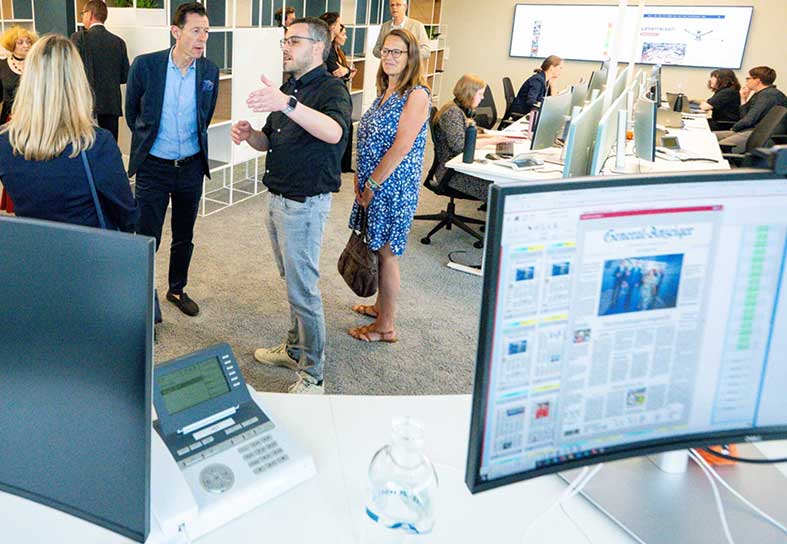
What does modern local journalism look like in the digital age? The journalism traineeship at the General-Anzeiger Bonn combines traditional reporting skills with digital news production and offers experience across a range of editorial departments. From an early stage, trainees are encouraged to contribute their own ideas and pursue their individual interests.
The General-Anzeiger Bonn is one of the region’s longest-established news organisations. Founded in 1889, the newspaper covers Bonn, the Rhein-Sieg district, and the Ahr Valley. When Bonn was the capital of West Germany and later of reunified Germany, national political reporting also played an important role, as many key political decisions were made right on the newspaper’s doorstep.
A Newspaper with Tradition and an Eye on the Future
At the same time, the General-Anzeiger has undergone major changes over the past few decades. The organisation embraced digital publishing early on and has continuously expanded its online presence. Today, the General-Anzeiger no longer sees itself solely as a daily newspaper, but as a multimedia news organisation. In addition to the print edition, its portfolio includes the news platform ga.de, apps, newsletters, podcasts, social media channels, magazines, and event formats. Across its print and digital platforms, the General-Anzeiger reaches around 300,000 people in the region every day.
Local Journalism Means Being Close to the Community
When people think of journalism, they often picture major political debates or international crises. Local journalism, by contrast, focuses on issues that directly affect people’s everyday lives. These may include decisions made by the city council, developments in local schools, cultural events, economic changes, or sporting events in the region.
This close connection to the community is one of the defining features of the traineeship at the General-Anzeiger. Trainees speak to local residents, representatives of clubs and associations, politicians, and experts, gaining an understanding of the region from a variety of perspectives. Their reporting often takes them directly to the people whose stories they are covering.
Bettina Köhl, deputy head of the Bonn local news desk and one of the coordinators of the traineeship programme, stresses that local journalism is about much more than reporting on municipal politics. Topics range from culture and business to broader social developments, giving journalists the opportunity to explore a wide variety of fields. It is precisely this diversity, she says, that makes local journalism distinctive and the working day so varied.
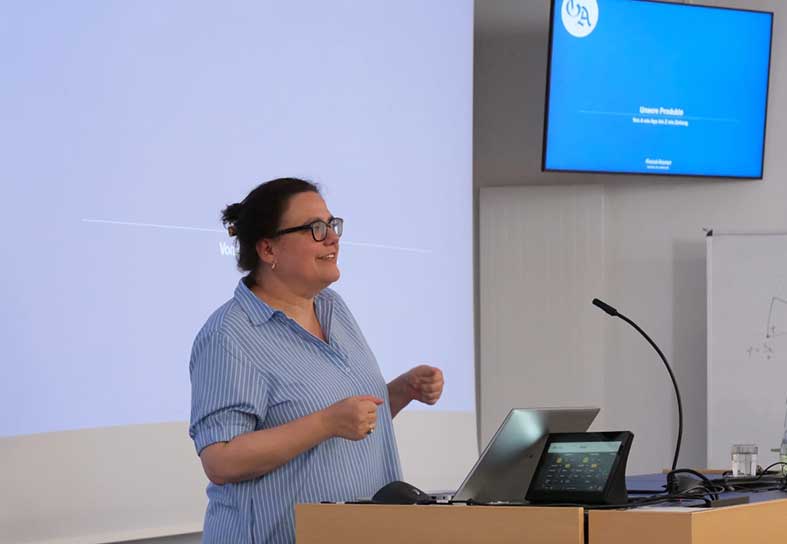
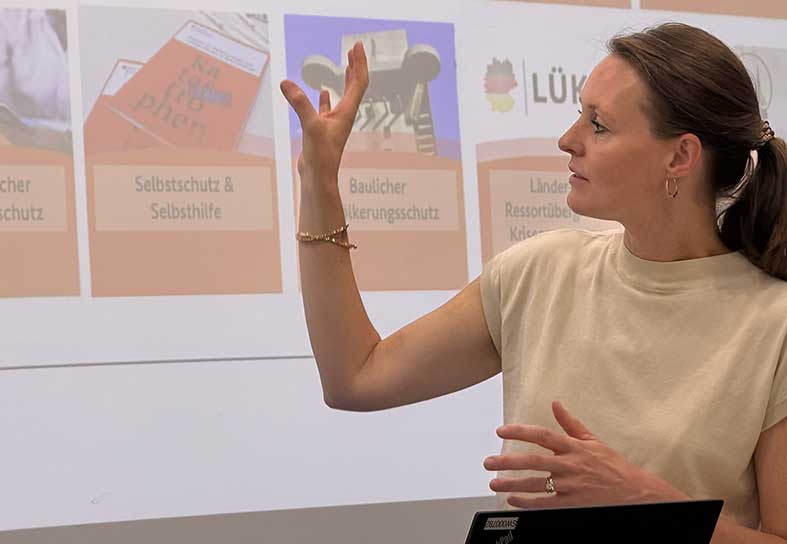
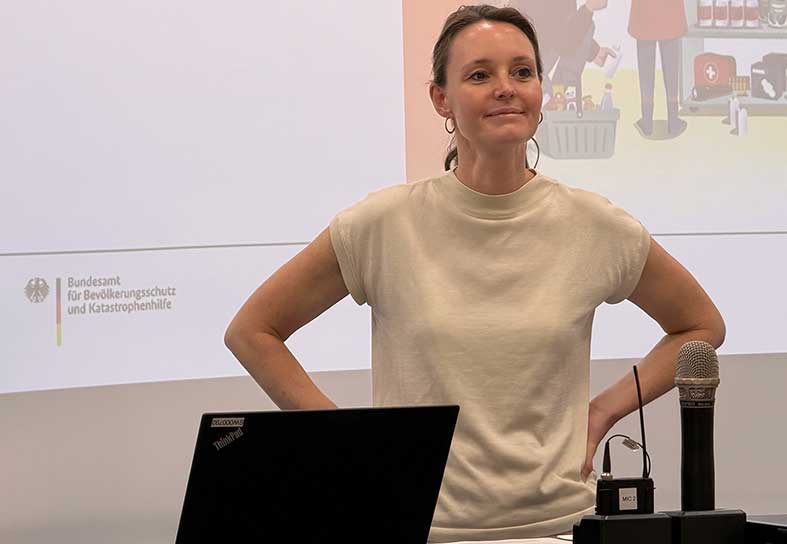
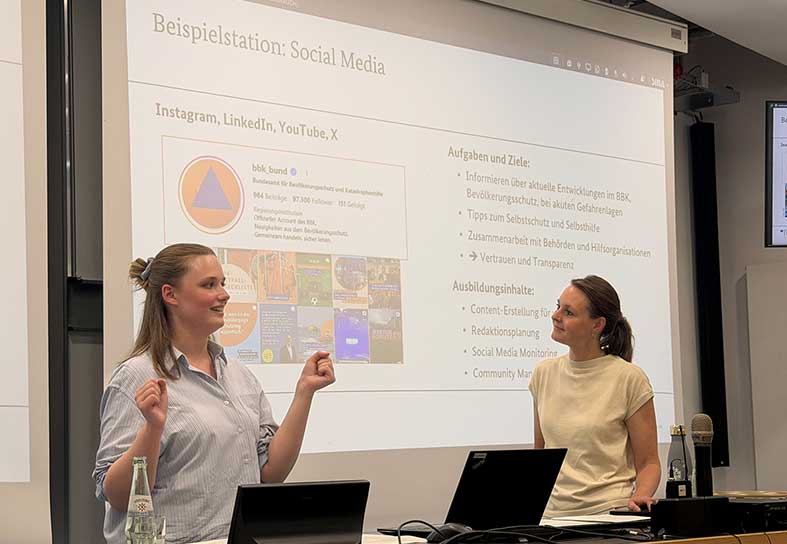
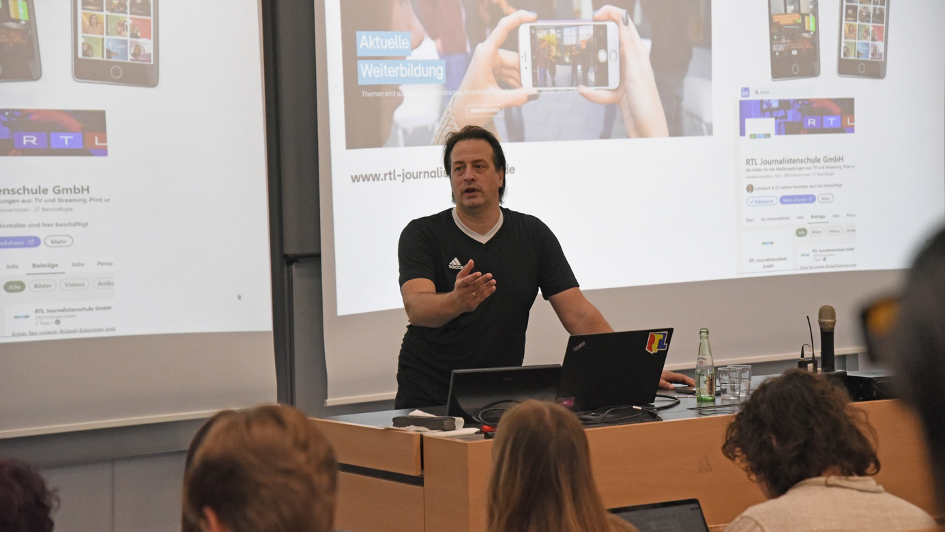
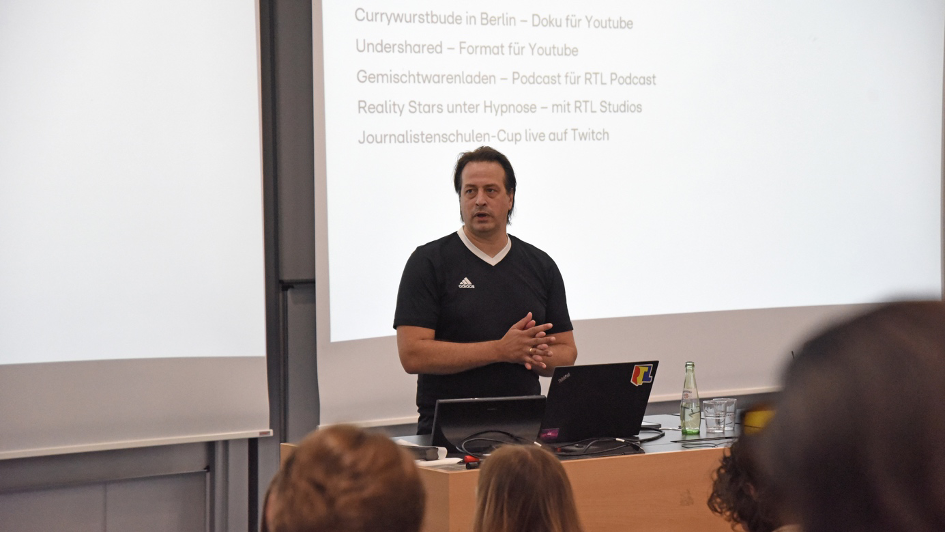
Bettina Köhler, Deputy Head of the Bonn local news desk, at the information session at Bonn-Rhein-Sieg University of Applied Sciences.
Training Across Different Editorial Departments
The traineeship lasts 24 months and focuses primarily on digital and local journalism. Trainees work at the digital desk, where they learn the fundamentals of digital news production. This is followed by longer placements with the Bonn local news team and the regional news desk.
They also spend time in other parts of the newsroom, including the business desk and the print desk. In addition, trainees can choose a placement in the culture section, sports desk, or weekend magazine. Assignments with the news team also give aspiring journalists the opportunity to cover breaking news and current events as they unfold.
The programme is complemented by in-house workshops. Trainees learn, for example, how to conduct interviews, write opinion pieces, and produce video content. Editing and the use of artificial intelligence in journalism are also part of the curriculum. In addition, trainees attend a four-week course at the Akademie für Publizistik in Hamburg, one of Germany’s most renowned journalism training institutions.
Bringing Your Own Interests to the Newsroom
Bettina Köhl particularly emphasises the opportunity for trainees to bring their own interests and experiences into their work. While the programme teaches essential journalistic skills, she explains, newsrooms also benefit from the individual perspectives of their journalists.
Trainees with a particular interest in sports, culture, science, or business, for example, can explore these areas in greater depth. Voluntary work and personal interests can also prove valuable. Experience in sports clubs, community organisations, social projects, or other areas of civic life can provide new perspectives on stories and help journalists build connections with potential sources.
The result is a structured training programme that combines fixed placements with plenty of room for individual interests. From an early stage, trainees are encouraged to pitch their own ideas and pursue stories that matter both to them and to their readers.
How “Digital First” Is Changing the Newsroom
Journalists‘ day-to-day work has changed considerably in recent years. While the printed newspaper was once the central product, digital reporting now takes priority. The “digital first” approach means that stories are initially produced and published for online platforms before being adapted for the print edition.
This shift affects the entire newsroom workflow. News has to be published more quickly, content adapted for different platforms, and new formats developed. At the same time, digital media offer additional ways of telling stories, including video, podcasts, photo galleries, and social media content.
Bettina Köhl explains that journalists today tend to have more specialised roles than in the past. Not every reporter needs to be permanently on call to cover breaking news. Instead, specific teams and individuals have clearly defined responsibilities. Digitalisation has therefore transformed not only the products journalists create, but also the way newsrooms organise their work.
Requirements and Career Prospects
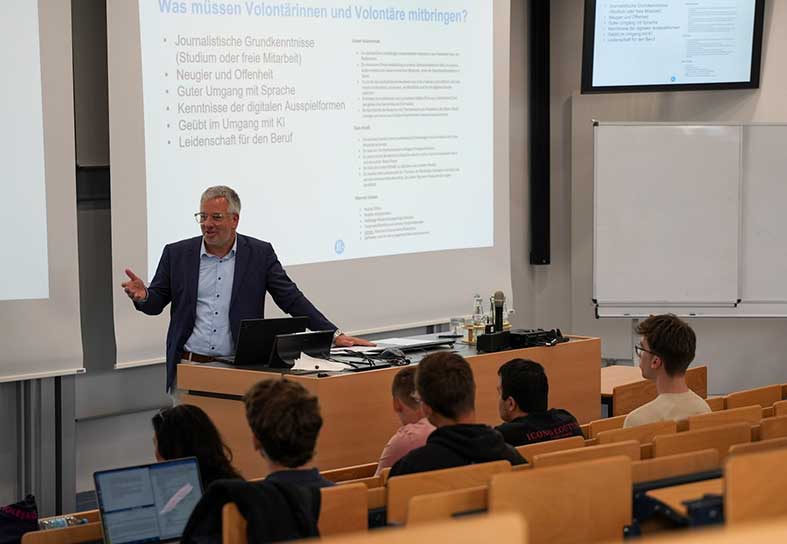
Applicants are generally expected to have completed a university degree, although the subject they studied is of secondary importance. Previous journalistic experience matters more—for example through internships, freelance work, or positions in online newsrooms.
Applicants should also be curious, enjoy talking to people, and have a strong interest in social and political issues. A good command of language, initiative, and the ability to quickly familiarise themselves with new and unfamiliar topics are equally important.
Whether trainees are offered a permanent position at the General-Anzeiger after completing the programme depends on staffing needs at the time. Regardless of whether they remain with the organisation, however, the traineeship provides them with a broad range of journalistic and digital skills that are highly relevant both in newsrooms and across the wider media industry.