
From Local Journalism to AI: A Journalism Traineeship at the Kölner Stadt-Anzeiger
Researching, developing, and publishing stories from across Cologne and the surrounding region: during the 24-month journalism traineeship at the Kölner Stadt-Anzeiger, aspiring journalists gain hands-on experience at what the newspaper describes as the region’s “No. 1 source of information”.
The Kölner Stadt-Anzeiger (KStA) is part of the DuMont Media Group. Alongside its traditional print edition, the daily newspaper is looking to strengthen its digital presence, particularly on social media. The KStA currently publishes its content on its website and as an e-paper and is active on social media platforms such as Instagram and Facebook.
At the same time, print remains an important part of the KStA’s strategy, as many readers continue to value the printed newspaper, Christian Hümmeler, deputy editor-in-chief of the KStA, explained during a talk with students of Technology Journalism and Visual Technical Communication at Bonn-Rhein-Sieg University of Applied Sciences. Reaching younger audiences, however, remains a challenge for the newsroom. This is one area in which young journalists can make a valuable contribution by bringing in their own ideas, suggestions, and expertise in digital content.
Individuality and Initiative Take Centre Stage
A new group of trainees joins the KStA every year around 1 September. There are currently three journalists completing the programme. The traineeship combines hands-on newsroom experience with external training. In addition to working in various editorial departments, participants attend two weeks of courses each year at the Institute for the Advancement of Journalism (ifp) in Munich.
Which KStA departments trainees work in depends largely on their individual interests. After an extensive introductory phase in the newsroom at the beginning of the programme, their placements are planned individually, with trainees explicitly encouraged to take the initiative. Everyone starts in the Cologne local news department before moving on to desks such as sports, culture, business, and politics. Placements are also possible at the Kölner Stadt-Anzeiger’s local bureaus outside Cologne, such as the newsroom covering the Rhein-Sieg district in Siegburg. Depending on individual arrangements, external placements at organisations such as WDR, Deutschlandfunk, RTL, or Correctiv can also be incorporated into the traineeship.
AI Is Now Part of the Journalist’s Toolkit
Artificial intelligence is having a major impact on local journalism as well. AI tools are already supporting the KStA team in various stages of the editorial process, from research to adapting content for different platforms. AI is changing the way articles are produced, says Christian Hümmeler. It is used particularly for stories that do not require extensive in-depth reporting and where an individual writing style plays a less prominent role, such as shorter news items.
At the tabloid EXPRESS, AI-generated news stories have for several years been deliberately published under the name “Klara Indernach” – a pseudonym referencing the German abbreviation “KI” for artificial intelligence. But even with these stories, as with all content produced with the help of AI in one form or another, a human journalist always has the final say.
For this reason, the ability to work with AI is becoming increasingly important for applicants as well. Nevertheless, journalistic responsibility must always remain with humans, Hümmeler stresses. Alongside the ability to use AI tools, core journalistic skills such as research, critical thinking, and a strong command of language remain indispensable.
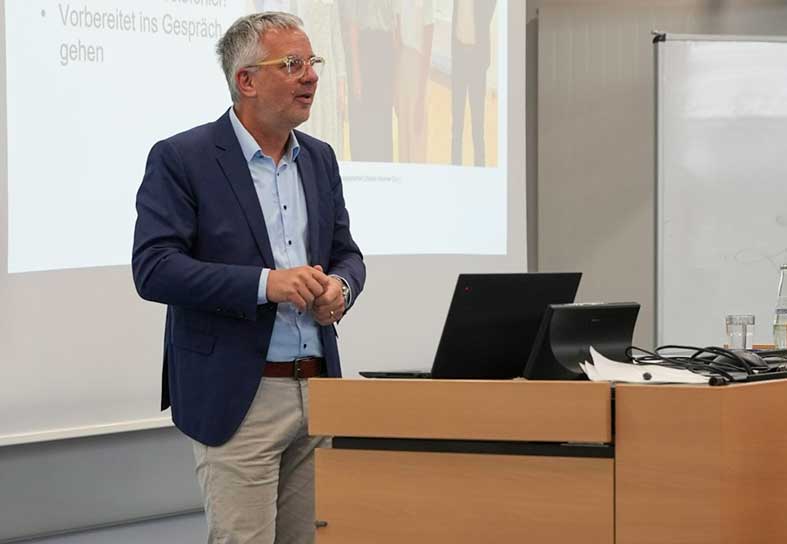
Christian Hümmeler, deputy editor-in-chief of the Kölner Stadt-Anzeiger, presents the journalism traineeship at Bonn-Rhein-Sieg University of Applied Sciences.
A Career for the Curious
Despite – or perhaps precisely because of – these technological changes, Christian Hümmeler sees curiosity and openness to new topics as essential qualities for journalists. He emphasises how important it is for journalists working at a local daily newspaper to stay in touch with regional events, public sentiment, and social change – and to turn these developments into relevant stories. Developing these skills requires practical experience.
Anyone hoping to become a journalist should therefore start gaining experience before completing their degree. Hümmeler stresses the importance of practical experience for launching a career in journalism. Internships, freelance work, or involvement in student media projects can provide valuable work samples and often make a crucial difference in an application.
Hümmeler also has one more piece of advice for prospective applicants: don’t forget the hyphen in “Kölner Stadt-Anzeiger” – whether in the address or in the cover letter. Even this can play a role in the selection process, he says, because it reveals something about an applicant’s care and attention to detail.
Economic Pressure and AI Are Reshaping the Industry
At the end of Christian Hümmeler’s talk, the students wanted to know: How likely is it that trainees will be offered a permanent position after completing the programme? Hümmeler says that some trainees do receive an offer to stay on after finishing their training. At the same time, he does not shy away from discussing the challenges facing the industry. Economic pressures and the changes brought about by AI are more likely to result in job cuts, he says openly. Nevertheless, the traineeship can provide an important foundation for starting a career in journalism – whether at the Kölner Stadt-Anzeiger or at another media organisation.
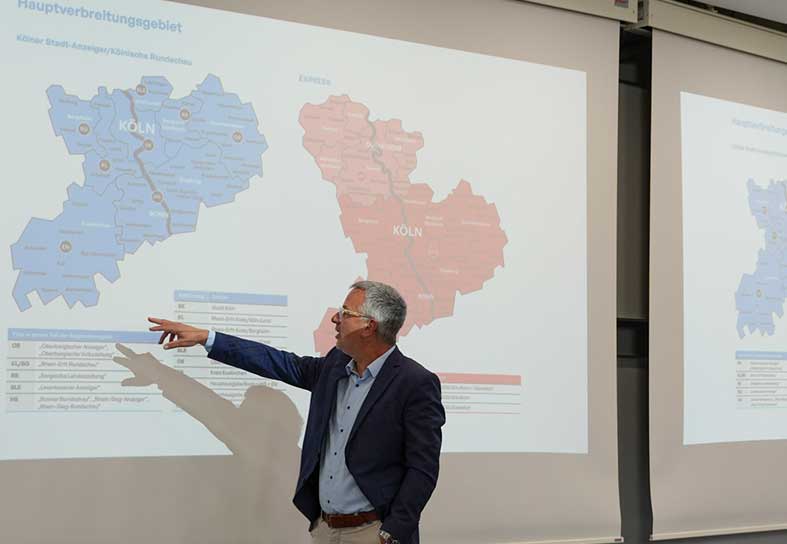
Christian Hümmeler presents the circulation area of the Kölner Stadt-Anzeiger.
“The Best Job in the World”
Despite the difficult situation facing journalism today, Hümmeler’s enthusiasm for his profession is unmistakable. Producing journalism himself is now a less frequent part of his working day, as management responsibilities take up most of his time. That makes the occasions when he can still write his own articles all the more enjoyable. For him, journalism remains “the best job in the world”.
Share this article via:
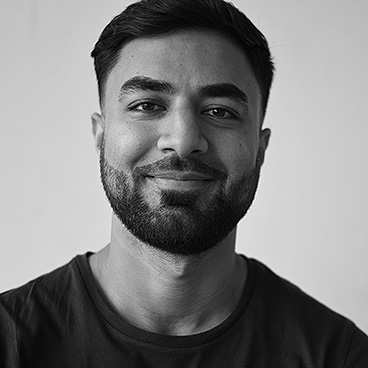
Matin Hashimi
Matin Hashimi, born in Peshawar in 1999, has a particular interest in digital media, visual design, and marketing. His training as a media designer gave him the opportunity to explore these interests in a practical way. Among other things, he manages the Instagram channel “Bonn.Germany,” where he showcases the city from different perspectives. When he’s not working on new content, he can be found at the gym, on the soccer field, or traveling.
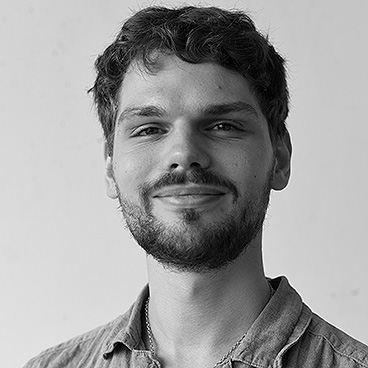
Sebastian Huhn
Sebastian Huhn, born in Lich in 2002, is particularly interested in knowledge communication, storytelling, and media design. Even while in school, he produced videos for his school, DBS-Lich, gaining his first experience in media production. He is particularly drawn to delving into complex topics and presenting them in an accessible way through video, graphics, or text. In the future, he hopes to focus primarily on knowledge dissemination on social media.
Simon Rodig
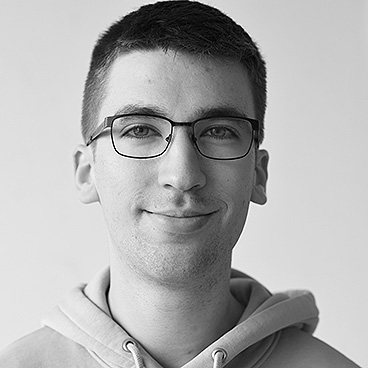
Simon Rodig, who was born in Dormagen in 2004 and grew up in Cologne, is particularly interested in science and the bigger picture. Through the Erasmus+ project ‘Let’s science our environment’, he not only broadened his knowledge, but also his horizons – through exchanges with young people from Spain, Portugal, England and Denmark. He also discovered his enthusiasm for travelling. As a result, he spent two months travelling through Europe with friends after graduating from high school. On these trips, he learnt to look at the world from different angles – a perspective that he now incorporates into his journalistic work.
Jared Rosenkiewicz
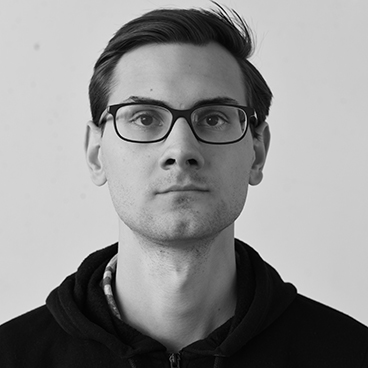
Jared Rosenkiewicz, born in Duisburg in 1999, was introduced to filmmaking as a child: During family vacations, he would often watch his mother behind the camera. Years later, he began taking photos and filming himself using a friend’s DSLR camera. Since 2020, he has also been gaining experience in marketing, combining media production with strategic communication. He finds particular inspiration for his work in sports.