
Short but One-Sided? Political Reporting on TikTok and Instagram
Leading German media such as ZDF heute, FAZ and RTL Aktuell use social media to communicate election coverage to young people in short form. A study shows that the focus is often purely on direct statements from politicians, without providing context or journalistic framing.
In the study, reels and TikToks from channels of the Süddeutsche Zeitung, RTL Aktuell, ZDF heute, the radio format Die da oben, Spiegel Magazin, Zeit Online, Bericht aus Berlin and the Frankfurter Allgemeine Zeitung were analyzed using a developed category system. This is based on the Recommendations of the New German Media Makers for a rethink in election reporting.
The results show that the short video formats often focus on the perspective of politicians. However, the concerns of voters and a well-founded assessment of the consequences of political decisions are often neglected. A Pageflow summarizes the background to the study as well as recommendations on how to rethinki election coverage and tips for young voters.
The master project
The results presented are based on a study that was carried out as part of a Master’s project in the Digital Communication and Media Innovation degree program.
Supervisor: Prof. Dr. Susanne Keil
Share this article via:
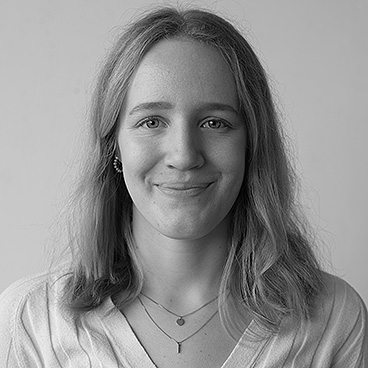
Greta Abstohs
Greta Abstohs, born in 2001 in the Bergisches Land region, now lives in Cologne. She still enjoys roaming through nature and spending a lot of time with her dog. She can often be seen with a book, always on the lookout for new stories and ideas. Alongside her studies, she works in a book publishing house in Cologne and transforms creative ideas into printed works. She particularly enjoys finding inspiration on Pinterest, where she discovers exciting reads, recipes and DIY projects.
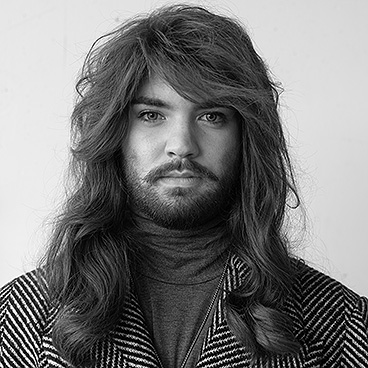
Tim Breuer
Tim Breuer began his studies with the desire to do “something with media” – and put this plan into practice. As a student assistant, he worked on the “gender2technik” research project, which investigates how technology reporting can be designed to appeal equally to men, women and non-binary people. He has also published a paper on artificial intelligence and gender. He is particularly interested in intersectional approaches in the STEM field and the perspectives of students from working-class families. In his free time, he enjoys gymnastics, cooking and photography.
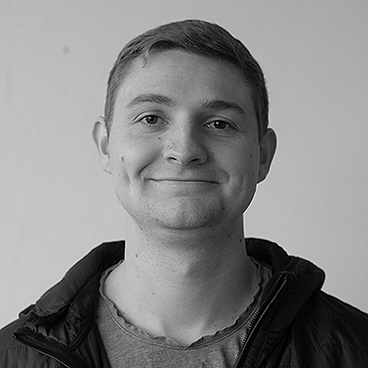
Christoph de Vries
Christoph de Vries, born in Troisdorf in 1998, spent many Saturdays in front of the radio as a child, listening to the WDR Bundesliga conference. Back then, he dreamed of one day traveling the big stadiums and arenas as a sports presenter himself. Although he is not yet on the radio, he enjoys being in front of an audience and presents carnival festivals in his home country, for example. He has already made it to WDR: he works as a student trainee in the Bonn regional studio. He sees his professional future in quality journalism.
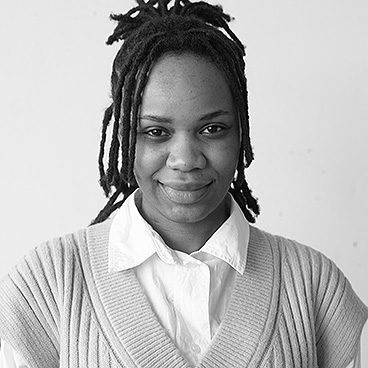
Denise-Paka Kialanda
Denise-Paka Kialanda, born in Potsdam in 2000, grew up in a culturally diverse environment that awakened her enthusiasm for language and communication. Her curiosity about science drew her to Karlsruhe to study science communication. Her interests are diverse: music and traveling enrich her life. She also creates creative content inspired by social media. Her next goal is to connect science and society even more closely.
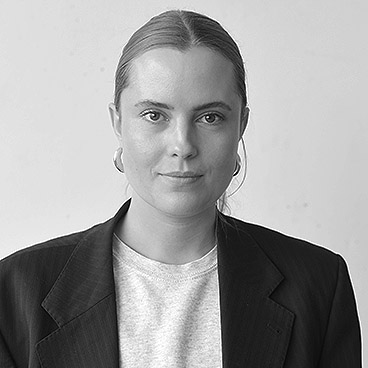
Emilia Matschulla
Emilia Matschulla, born in 1998, spends too much time in front of screens – professionally, of course. The question of how to tell stories online led her into journalism. At WDR, Süddeutsche Zeitung Magazin and later at ZEIT Online, she learned how to use digital storytelling formats – and that social media is more than just a platform: it is a central space for debates and new perspectives. She is passionate about journalism that thinks in a diverse and feminist way, because there are still stories that are told too rarely or too one-dimensionally. The fact that her own screen time remains high is probably an occupational hazard.
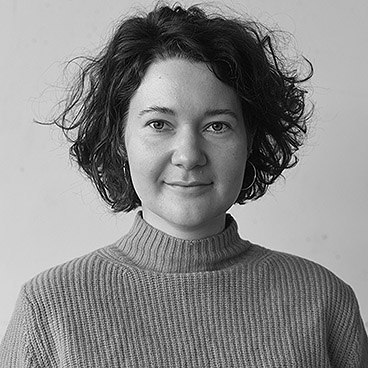
Jenny Müller
Jenny Müller was born in 1997 and is passionately interested in the world of media. Fairytale books, impressive art exhibitions and the power of innovative visual language have had a lasting impact on her view of art and communication. The creative diversity and profound messages of these works inspire her to tell her own story in powerful words and expressive images.
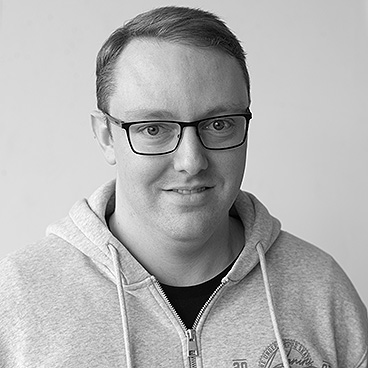
Janik Nolden
Janik Nolden, born in Bonn in 1996, is fascinated by technology and media. This enthusiasm led him to study this subject and later to a traineeship in press and public relations at the German Federal Agency for Technical Relief, where he also completed his basic volunteer training. In his free time, he also devotes himself to voluntary work and contributes to shaping local life with great commitment.
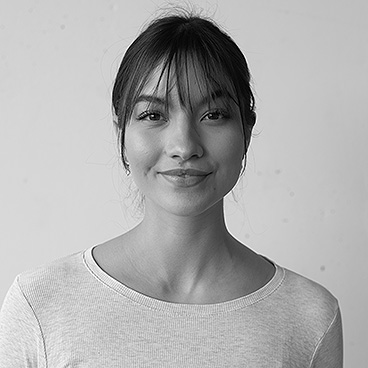
Saida Christina Stegemann
Saida Christina Stegemann is a creative all-rounder who loves words and communication. She became enthusiastic about modern storytelling and innovative media strategies at an early age. She found her professional home in the PR industry, where she impresses with her passion for copywriting. Her creativity is not only evident in her texts, but also in her artistic expression. Mangas and sporting activities provide her with the necessary balance.
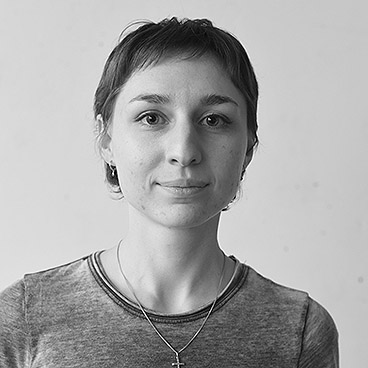
Angela Valdivia Manchego
Angela Valdivia Manchego, born in Bonn in 2001, has always been creative. She draws, designs clothes and captures nature with her camera. However, her greatest passion is anime, films and series – she is particularly fond of coming-of-age stories from Japan and Italy. Inspired by these, she now makes her own videos, combining her interest in cyberspace and the natural sciences. She also produces short explanatory videos on Instagram, for example for the German Federal Office for Information Security.